
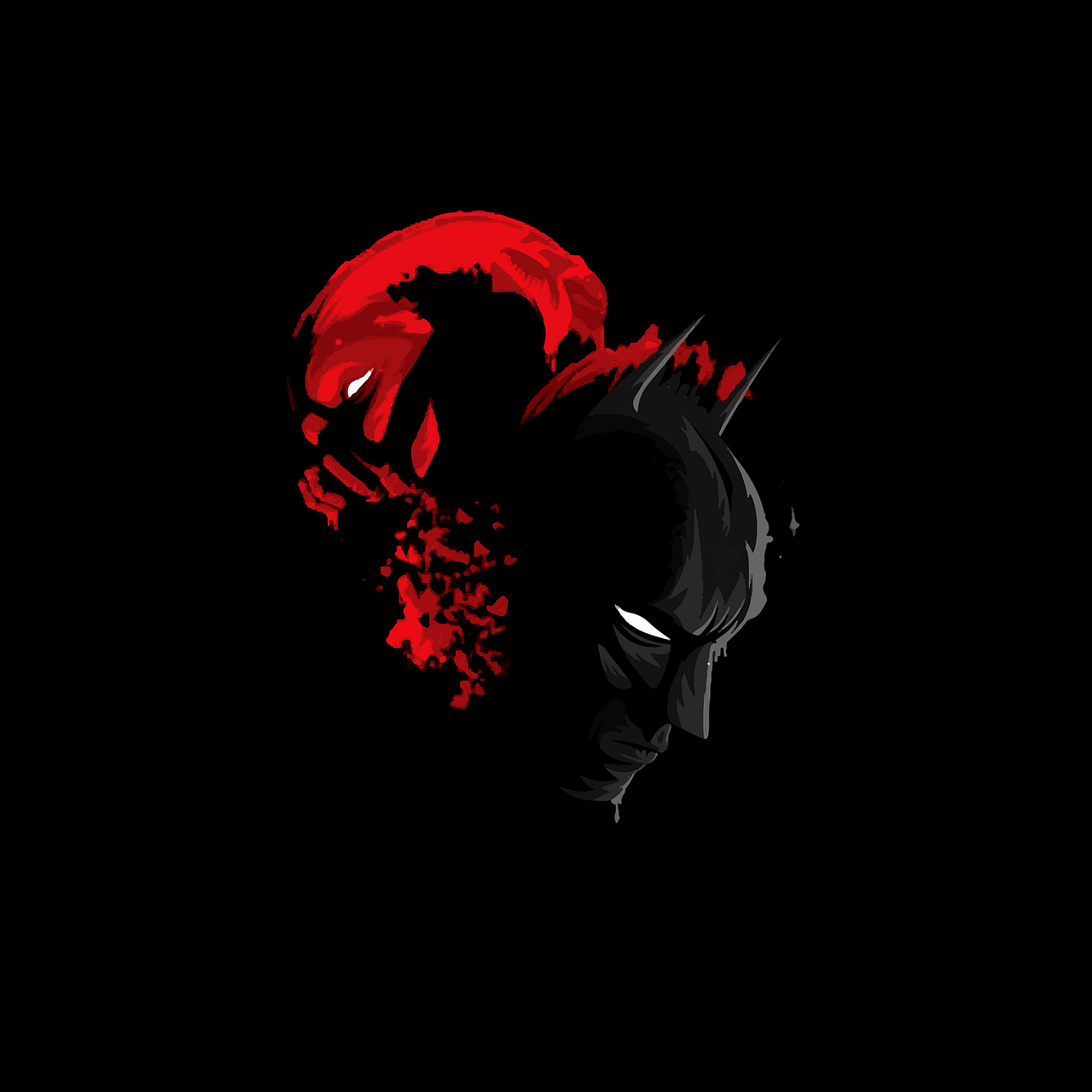
Christopher Nolan’s The Dark Knight isn’t just an action thriller. It’s one of the most philosophically dense blockbusters ever made. Behind the explosions and chase sequences lies a serious exploration of morality, truth, power, and human nature. Let’s break down every major philosophical idea in the film.
Existentialism: You Are Your Choices (Sartre/Kierkegaard)
The Joker is the film’s existentialist philosopher. When he tells Batman “You complete me,” he’s expressing a core existentialist idea. These two men define each other through opposition. Neither can exist without the other. They create meaning through their conflict.
The Joker has no real origin story. He tells different people different stories about how he got his scars. To Gambol, it’s about his father. To Rachel, it’s about his wife. This isn’t just mystery for mystery’s sake. The Joker is demonstrating that narrative itself is arbitrary. There’s no true backstory because, as Sartre said, existence precedes essence. The past doesn’t determine who you are. You are only your choices in the present moment.
When the Joker says “I’m a dog chasing cars. I wouldn’t know what to do with one if I caught it. I just do things,” he’s lying. He’s actually incredibly strategic and planned. But he’s making a deeper point about human attempts to control outcomes being fundamentally delusional.
The Joker tells Harvey Dent: “Don’t talk like one of them. You’re not! Even if you’d like to be. To them, you’re just a freak, like me!”
This is the Joker revealing that both he and Batman exist outside society’s moral framework. Batman pretends he’s working within the system, but he’s not. He’s a vigilante who operates beyond the law. The Joker is simply more honest about his position outside the social contract.
Nihilism: Nothing Has Inherent Meaning (Nietzsche)
The Joker embodies philosophical nihilism. When he burns a massive pile of money, he tells the mob: “It’s not about money. It’s about sending a message. Everything burns.”
Money is just paper that only has value because we collectively agree it does. By burning it, the Joker is trying to collapse the shared delusion that makes society function. He wants to prove that all our values are human constructs with no objective reality.
He tells Batman: “When the chips are down, these civilized people, they’ll eat each other.”
This is pure Hobbesian nihilism mixed with a rejection of social order. The Joker believes that without the state enforcing rules, humans revert to pure self interest. But he adds a darker twist. Even with the state, morality is just performance. When tested, people abandon their principles.
The Joker also perverts Nietzsche’s famous quote. Nietzsche said “What doesn’t kill me makes me stronger.” The Joker changes it: “Whatever doesn’t kill you simply makes you stranger.” He’s rejecting the idea that suffering leads to growth. Instead, trauma just makes you more alien, more disconnected from normal human experience.
Harvey Dent completes his transformation into nihilism after Rachel’s death. He tells Gordon’s son: “You thought we could be decent men in an indecent time. But you were wrong. The world is cruel, and the only morality in a cruel world is chance.”
Two Face’s coin flip represents the ultimate nihilistic position. If nothing has meaning, then random chance is as valid a decision making process as any moral system.
Utilitarianism: The Greatest Good for the Greatest Number (Bentham/Mill)
The ferry scene is the film’s explicit exploration of utilitarian ethics. The Joker gives two ferries detonators. One ferry has civilians. The other has prisoners. Each can blow up the other boat to save themselves.
This is a direct application of utilitarian calculus. Kill the few to save the many. The civilians even vote democratically to blow up the prisoners. A businessman stands up to push the button but can’t do it.
The fascinating twist is that a prisoner, someone society has labeled as immoral, makes the actual moral choice. He takes the detonator from the guard and throws it out the window without discussion or vote.
The experiment proves that people won’t execute utilitarian calculations even when they agree with them in theory. Abstract moral positions are easy. Concrete moral actions are impossibly hard.
Batman himself is a utilitarian throughout the film. When he interrogates Maroni, the mobster says: “From one professional to another, if you’re trying to scare somebody, pick a better spot. From this height, the fall wouldn’t kill me.”
Batman responds: “I’m counting on it.” Then he drops Maroni off the building, breaking his legs.
This is torture. Batman harms one person to extract information that might save many. He’s making a utilitarian calculation. Individual rights matter less than the collective good.
The entire surveillance system subplot is utilitarian. Lucius Fox tells Batman: “This is too much power for one person.” But Batman built it anyway because the outcome, catching the Joker, justified violating everyone’s privacy.
Deontological Ethics: Duty and Rules (Kant)
Batman claims to follow Kantian ethics with his famous line: “I have one rule.”
Immanuel Kant argued for categorical imperatives. These are moral rules that apply universally regardless of consequences. The most famous is: “Act only according to that maxim whereby you can at the same time will that it should become a universal law.”
Batman’s one rule, not killing, sounds like a categorical imperative. It’s a principle he follows regardless of circumstances. When the Joker is hanging upside down and Batman could let him fall, Batman saves him.
But here’s the problem. Batman violates Kantian ethics constantly in every other area:
He tortures people for information. He conducts illegal surveillance on the entire city. He kidnaps Lau from China, violating international law. He beats criminals to the point of severe injury.
But he won’t kill? Why is this the line? The film never actually justifies it philosophically. It’s just asserted as his defining characteristic.
A true Kantian would say Batman’s vigilantism itself violates the categorical imperative. You can’t universalize “it’s okay to take justice into your own hands” without destroying the entire legal system.
Virtue Ethics and Its Collapse (Aristotle)
Harvey Dent represents virtue ethics. This is the idea that morality comes from character, from being a good person who naturally makes good choices. Aristotle argued that we become virtuous through practice and habit.
Harvey is called the White Knight. His entire identity is built on being incorruptible. He tells Bruce Wayne at the fundraiser: “You either die a hero or live long enough to see yourself become the villain.”
He’s Gotham’s moral exemplar. Everyone, including Rachel and Batman, sees him as proof that good people can win without compromising.
But the film asks a brutal question. What happens when virtue ethics encounters genuine tragedy? The answer is complete collapse.
After Rachel’s death and his disfigurement, Harvey’s entire moral framework shatters. He can no longer bear the weight of moral choice. So he outsources all decisions to a coin flip.
The film shows that character based morality is fragile. It depends on favorable circumstances. When those circumstances are destroyed, virtue disappears.
Interestingly, Rachel plants the seed of Harvey’s fall before he transforms. During their dinner, she tells him: “The only morality in a cruel world is chance. Unbiased, unprejudiced, fair.”
She says this before he becomes Two Face. The philosophy he later adopts was already in his moral universe through the woman he loved.
Social Contract Theory (Hobbes/Locke)
The Joker is trying to disprove social contract theory. This is the philosophical idea that people give up some freedoms to the state in exchange for security and order.
Thomas Hobbes argued that without government, life would be “nasty, brutish, and short.” People would be in a constant war of all against all. John Locke offered a more optimistic version where people naturally have rights that government exists to protect.
The Joker wants to prove Hobbes was right about human nature but wrong about the solution. He tells Harvey: “Nobody panics when things go according to plan, even if the plan is horrifying. Because it’s all part of the plan.”
He’s arguing that people only follow social rules because they’re comfortable. Remove comfort and security, and civilization collapses immediately.
The ferry experiment is his direct test of this theory. Will people kill strangers to save themselves when the social order is suspended? The answer, surprisingly, is no. Both groups refuse to blow up the other ferry.
But the Joker proves himself partially right. The civilian ferry votes democratically to commit murder. They just can’t follow through. So people are willing to support violence, they just want someone else to execute it.
The Panopticon and Surveillance (Foucault)
When Batman turns every phone in Gotham into a surveillance device, the film enters Michel Foucault’s territory. Foucault wrote about the panopticon, a prison design where guards can see all prisoners but prisoners can’t see guards.
The power of the panopticon isn’t just observation. It’s that people modify their behavior because they might be watched. Surveillance normalizes itself through fear.
Lucius Fox immediately grasps the danger: “This is too much power for one person.”
Batman’s response is telling: “That’s why I gave it to you. Only you can use it.”
Batman is outsourcing moral responsibility. He knows the surveillance is wrong, but he’s doing it anyway and letting Fox carry the ethical burden of using it.
Fox agrees to use it “just this once” then demands it be destroyed. But this is how surveillance states are built. Temporary emergency measures become permanent. “Just this once” becomes “just one more time” becomes normal.
The film doesn’t condemn Batman’s surveillance, but it doesn’t celebrate it either. It shows the pragmatic logic that leads good people to build authoritarian systems.
Plato’s Noble Lie
The ending of the film is based on Plato’s concept from The Republic. Plato argued that philosopher kings, the wise elite who rule, should sometimes tell noble lies to maintain social order.
Batman tells Gordon: “Sometimes the truth isn’t good enough. Sometimes people deserve more. Sometimes people deserve to have their faith rewarded.”
They decide to lie about Harvey Dent’s murders. Batman will take the blame so Harvey can remain a hero and symbol for Gotham. Gordon tells his son: “He’s the hero Gotham deserves, but not the one it needs right now. So we’ll hunt him. Because he can take it.”
This is Plato’s noble lie in action. The elite, Batman and Gordon, decide what truth the public can handle. They appoint themselves as guardians who determine reality for others.
But this is philosophically and practically dangerous. Who gave them this right? And what happens when the lie is exposed, as lies always are?
The film presents this as tragic but necessary. But history shows noble lies always backfire. When revealed, they destroy trust in institutions far more than the original truth would have.
Machiavelli and Power (The Prince)
Batman, the mob, and even Gordon operate on Machiavellian principles throughout the film. Niccolò Machiavelli wrote in The Prince that leaders should prioritize effectiveness over morality.
Machiavelli’s famous advice was “it is better to be feared than loved.” Batman’s entire method is based on fear. He uses terror as a tool of control.
When Batman kidnaps Lau from Hong Kong, he’s following pure Machiavellian logic. The ends, prosecuting the mob, justify the means, violating Chinese sovereignty and international law.
The mob operates on Machiavellian principles too. They form alliances based on utility, not loyalty. When the Joker becomes useful, they hire him despite finding him distasteful.
But the Joker himself is anti Machiavellian. He rejects the entire framework of power through resources and strategic alliances. When he burns the money, he’s destroying the foundation of Machiavellian power politics.
The Trolley Problem
The ferry scene is also a version of the famous trolley problem in ethics. Philippa Foot created this thought experiment: A trolley is heading toward five people. You can pull a lever to redirect it, but it will kill one person instead. Do you pull the lever?
The ferries present a variation: You can actively kill one group to save your own group. The problem tests whether we judge action differently from inaction. Is killing someone actively worse than letting them die passively?
The civilians vote to pull the lever, to actively kill the prisoners. But when it comes time to actually do it, they can’t. The weight of active killing is too much.
The prisoner who throws away the detonator makes a different choice. He refuses to play the game at all. Sometimes the moral choice is to reject the framework of the dilemma itself.
Nietzsche’s Übermensch
Friedrich Nietzsche wrote about the Übermensch, or overman, in Thus Spoke Zarathustra. This is someone who transcends conventional morality to create their own values.
Both Batman and the Joker attempt to be the Übermensch, but in different ways.
Batman tries to transcend good and evil by creating his own moral code. He operates outside the law to enforce a higher justice. But he’s still bound by his one rule, which means he hasn’t fully transcended conventional morality.
The Joker is closer to a successful Übermensch, though in a twisted way. He’s completely transcended conventional morality. He creates his own values, or explicitly rejects the concept of values entirely.
When the Joker says “I’m ahead of the curve,” he’s claiming to have moved beyond conventional moral thinking. He sees himself as having evolved past the need for the comfortable lies society tells itself.
But Nietzsche didn’t advocate for chaos or destruction. The Übermensch was supposed to create new values that affirm life. The Joker just destroys. So he’s a failed Übermensch, someone who transcended morality but couldn’t create anything better.
Camus and Absurdism
Albert Camus wrote about the absurd, the conflict between humans searching for meaning and a universe that offers none. In The Myth of Sisyphus, he asked whether we should commit suicide in the face of this meaninglessness. His answer was no. We should embrace the absurd and create meaning anyway.
Batman is a Sisyphean hero. He’s fighting a war on crime that can never be won. Crime will always exist. The Joker will always escape. Another villain will always appear.
But Batman continues anyway. He accepts the absurd burden of being Gotham’s protector despite knowing it’s endless and possibly futile.
The Joker represents the opposite response to absurdism. He recognizes the absurdity and celebrates it. He doesn’t search for meaning. He creates chaos as his response to meaninglessness.
When the Joker says “I’m like a dog chasing cars. I wouldn’t know what to do with one if I caught it,” he’s expressing the absurdist position. There’s no goal, no meaning, just the action itself.
Tragedy and Hamartia (Aristotle)
Harvey Dent’s transformation follows the structure of classical Greek tragedy as defined by Aristotle in Poetics.
Every tragic hero has a hamartia, a fatal flaw. Harvey’s flaw is his pride in his own moral purity. He sees himself as incorruptible, the White Knight who will save Gotham.
The tragedy follows Aristotle’s structure. There’s the peripeteia, the reversal of fortune, when Rachel dies and Harvey is disfigured. Then comes anagnorisis, the recognition or discovery, when Harvey realizes “the world is cruel” and his moral framework was built on comfortable lies.
The audience experiences catharsis, the emotional purging that Aristotle said was tragedy’s purpose. We feel pity for Harvey’s fall and fear that the same could happen to us under similar circumstances.
Harvey even predicts his own tragic arc: “You either die a hero or live long enough to see yourself become the villain.” This is dramatic irony. He knows his potential fate but can’t prevent it.
The Problem of Dirty Hands
Political philosophers discuss the problem of dirty hands. Can good people do bad things for good reasons? Is it possible to remain morally pure while wielding political power?
Batman embodies this problem. He tortures, surveils, and operates outside the law. His hands are dirty. But he believes these actions are necessary to protect Gotham.
Gordon faces the same dilemma. He’s the honest cop, but he lies to his family by faking his death. At the end, he lies to all of Gotham about Harvey’s crimes.
The film never resolves whether dirty hands are justified. It shows the cost, the moral compromise, the slippery slope. Gordon starts the film as the honest cop and ends it framing an innocent man.
Determinism vs Free Will
Two Face’s coin represents hard determinism. By letting chance decide his actions, Harvey is surrendering free will. He’s letting outcomes be determined by random physical processes rather than conscious choice.
Before his fall, Harvey believed in free will and agency. “You make your own luck,” he tells Bruce. But after trauma, he can’t bear the weight of choice anymore. So he adopts determinism.
The Joker, despite his chaos rhetoric, believes in radical free will. He’s constantly trying to prove that people are free to choose evil. His experiments, like the ferries, are designed to demonstrate that humans can choose anything, including choosing to abandon their principles.
Batman operates somewhere in between. He tries to follow rules, which is deterministic. But he also believes individual choices matter, which is free will. He’s attempting compatibilism, the idea that determinism and free will can coexist.
Rawls and Justice
John Rawls wrote about justice and fairness in A Theory of Justice. He proposed the veil of ignorance. Imagine designing a society without knowing what position you’d hold in it. That would produce the fairest system.
Two Face’s coin is a perverted version of the veil of ignorance. The coin flip means no one knows the outcome in advance. It’s “fair” in the sense that it’s unbiased. As Harvey says: “Unbiased, unprejudiced, fair.”
But Rawls was talking about justice through rational design. Two Face uses randomness. Chance isn’t justice. It’s just the absence of bias. True justice requires reason and principles, not dice rolls or coin flips.
The Ship of Theseus and Identity
Bruce Wayne presents a philosophical puzzle about identity. If every part of your identity is performance, what’s the real you?
In public, he’s the playboy billionaire. With Rachel and Alfred, he’s vulnerable Bruce. As Batman, he’s the dark knight. Which one is real?
At the restaurant, he pretends to be drunk and irresponsible to protect his Batman identity. Rachel knows it’s an act. Harvey doesn’t.
This is the Ship of Theseus problem. If you replace every plank of a ship, is it still the same ship? If Bruce performs different roles constantly, is there a core Bruce underneath, or is he just the sum of his performances?
The Joker tells Batman “You complete me” because the Joker might be the only person who sees past all Bruce’s masks and engages with something authentic underneath.
Hobbes’ Leviathan
Thomas Hobbes wrote in Leviathan that humans need a strong central authority to prevent them from destroying each other. Without the state, life would be constant war.
Harvey Dent references this directly at the fundraiser: “When their enemies were at the gates, the Romans would suspend democracy and appoint one man to protect the city. It wasn’t considered an honor. It was considered a public service.”
Harvey is already flirting with authoritarianism before his fall. He’s suggesting that extreme circumstances justify extreme measures and concentrated power.
Batman is a Hobbesian figure. He’s appointed himself as Gotham’s protector, operating outside democracy and legal constraints. He’s the strong authority that Hobbes said society needs.
But the film also questions this. If Batman is necessary, what does that say about Gotham? And who gave him this authority?
The Joker wants to prove that even with the Leviathan, the state, people will turn on each other. Remove enough social pressure and humans revert to self interest and violence.
Why This Matters
The Dark Knight isn’t just referencing philosophy to seem smart. It’s actually working through these ideas dramatically. Every action in the film tests a philosophical position.
The ferry scene doesn’t just mention utilitarianism. It shows you what utilitarian calculation actually looks like when you have to press the button yourself.
Batman’s surveillance system doesn’t just reference Foucault. It shows you exactly how well meaning people build authoritarian systems step by step.
The ending doesn’t just discuss noble lies. It shows you the exact moment good men decide the public can’t handle the truth.
This is philosophy as cinema. Ideas become visceral, dramatic, emotionally real. You’re not reading about the trolley problem in a textbook. You’re watching terrified people on two ferries trying to decide if they can murder strangers to live.
That’s the achievement of The Dark Knight. It made a billion dollars while making audiences think about Kant and Hobbes without realizing they were thinking about Kant and Hobbes.
It proved that mass entertainment and serious philosophy aren’t mutually exclusive. You can have both the spectacle of a flipped truck and the substance of questioning whether civilization’s moral codes are genuine or just comfortable lies we tell ourselves.
The film doesn’t provide easy answers. It doesn’t tell you whether Batman is right or wrong. It shows you the cost of every choice and lets you wrestle with the questions yourself.
That’s what great art does. It complicates easy positions. It makes you think. And fifteen years later, we’re still arguing about whether Batman should have killed the Joker, whether the ferries proved humanity is good or just cowardly, and whether the ending’s noble lie was wisdom or moral bankruptcy.
That’s not just a superhero movie. That’s philosophy.
